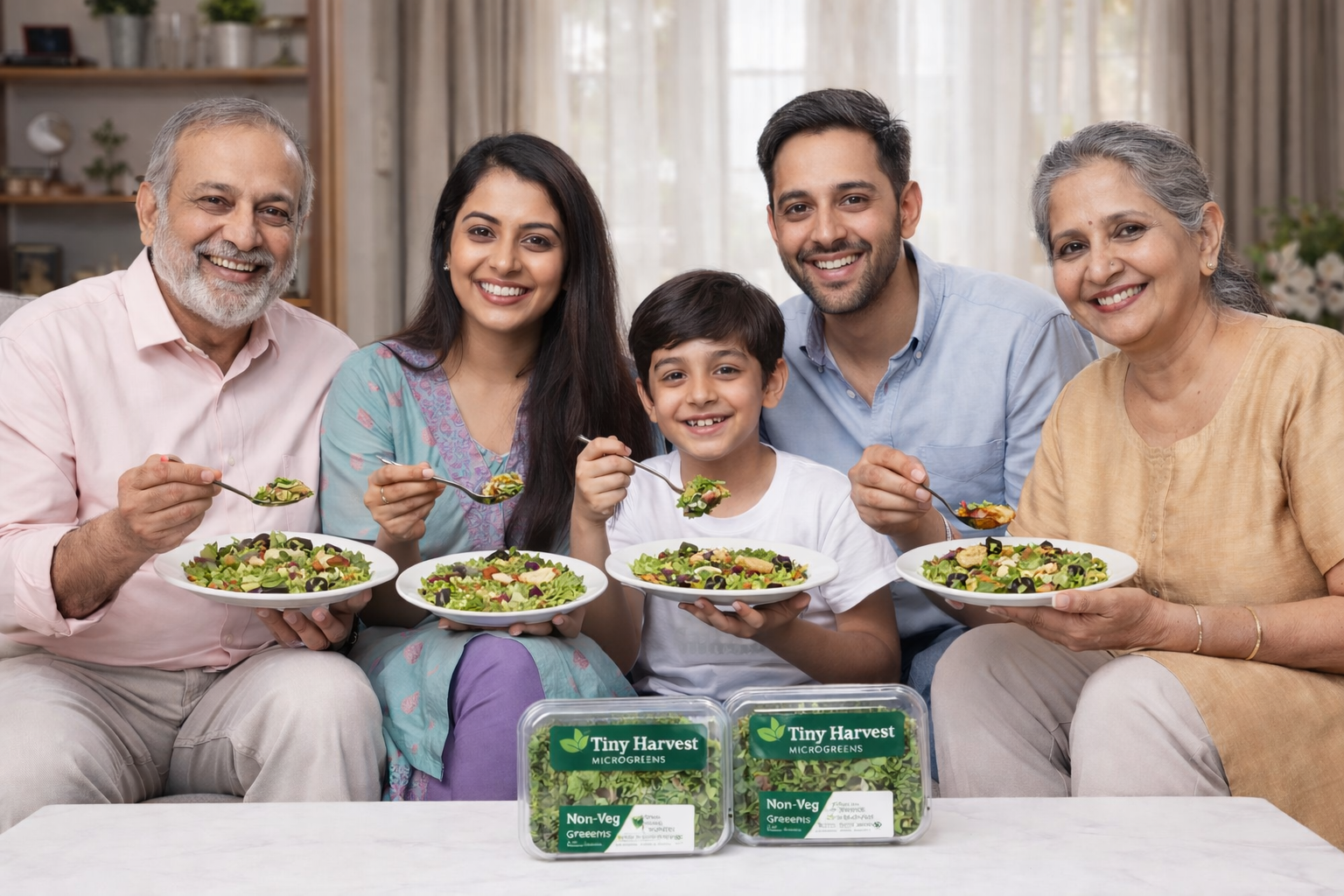
Why Microgreens Matter
Most people struggle to hit their daily vegetable quota. Microgreens solve this by offering "nutritional density." Instead of eating a massive bowl of kale, a small handful of kale microgreens provides a similar profile of Vitamin C, K, and Beta-carotene. They are the ultimate "hack" for a modern, busy lifestyle.
Health Benefits: From Toddlers to Seniors
| Age Group | Key Benefit | Top Microgreen Pick |
| Childhood (1–12) | Brain development & immune support. | Sunflower: Rich in healthy fats and zinc. |
| Teens & Young Adults | Skin health (acne) & hormonal balance. | Radish: High in Vitamin B6 and folate. |
| Adults (30–60) | Stress management & heart health. | Broccoli: Contains Sulforaphane for detox. |
| Seniors (60+) | Bone density & cognitive clarity. | Red Cabbage: High in Vitamin K and antioxidants. |
1. For the Growing Years (Kids & Teens)
Microgreens are a parent's best friend. Because they are small and can be "hidden" in smoothies or sandwiches, they provide the essential Vitamin A and C needed for developing immune systems without the "dinner table battle."
2. For the Power Years (Adults)
Life is demanding. Microgreens like Arugula and Broccoli are rich in polyphenols that fight inflammation caused by stress and processed foods, protecting your heart and metabolic health.
3. For the Golden Years (Seniors)
Aging often comes with a decline in nutrient absorption. Microgreens are easy to digest and packed with lutein (for eye health) and Vitamin K (for bone strength), helping to ward off age-related macular degeneration and osteoporosis.
Can They Help Recovery?
While microgreens aren't a "cure-all" medicine, their high antioxidant profile helps the body recover faster from specific conditions:
- Inflammatory Conditions: Helping reduce the flare-ups of arthritis.
- Digestive Issues: The fiber and enzymes assist in gut microbiome repair.
- Post-Illness: High Vitamin C concentrations speed up cellular repair after a cold or flu.
- Anemia: Many microgreens (like beet or chard) are high in bioavailable iron.
How Much is Enough? (Daily Limits)
Because they are so concentrated, you don't need a plateful.
- Recommended Daily Intake: 25g to 50g (roughly one large handful).
- A Note on Variety: It is better to eat a small amount of different types than a large amount of just one, as this ensures a broader spectrum of micronutrients.
Your Weekly "Tiny Harvest" Plan
To maximize your health, rotate your greens. Here is a simple weekly roadmap:
- Monday & Tuesday: Broccoli Microgreens (Focus: Detox & Heart Health)
- Try it: Topping your morning avocado toast.
- Wednesday & Thursday: Radish & Pea Shoots (Focus: Energy & Digestion)
- Try it: Tossed into a mid-day wrap or salad.
- Friday & Saturday: Sunflower & Beet Greens (Focus: Muscle Recovery & Iron)
- Try it: Blended into a post-workout fruit smoothie.
- Sunday: Chef’s Choice Mix (Focus: General Wellness)
- Try it: Garnish on your Sunday roast or pasta.
Final Thoughts
Microgreens aren't just a trend; they are a nutritional insurance policy. By adding just a pinch to your meals daily, you are investing in long-term health that scales with you as you age.
Ready to start your health journey with tiny harvest? Check out our products to begin your journey!